Basics
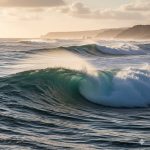
- Waves are nothing but the oscillatory movements that result in the rise and fall of the water surface.
- Waves are a kind of horizontal movement of ocean water.
- They are actually the energy, not the water as such, which moves across the ocean surface.
- This energy for the waves is provided by the wind.
Parts of Waves
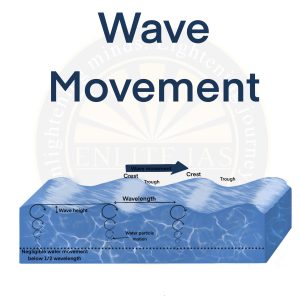
| Wave crest and trough |
|
| Wave height |
|
| Wave amplitude |
|
| Wave period |
|
| Wavelength |
|
| Wave speed |
|
| Frequency |
|
Wave Types
| Type of Wave | Period | Wavelength | Depth of Influence | Source |
| Capillary or Ripple | < 1 second | < 2 cm | Very Shallow | Light wind,insects |
| Chop | 1 – 10 seconds | 1 – 10 m | Shallow | Strong wind |
| Swell | 10 – 30 seconds | up to 100 m | Half of the wavelength | Storms |
| Tsunami | 5 – 90 minutes | 20 Km to 300+ Km | To the bottom | Earthquakes, Landslides, Volcanic eruptions, and more |