

Demand:
Think about how EI/EQ can benefit individuals. Also touch on why IQ is not sufficient enough.
Introduction
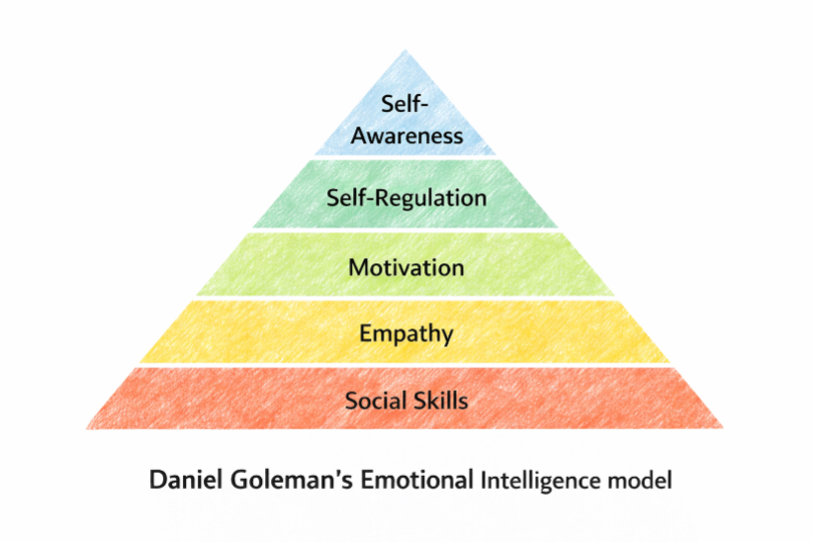
Emotional Intelligence (EI), as defined by Daniel Goleman, includes self-awareness, self-regulation, motivation, empathy, and social skills. While IQ reflects analytical competence, EQ shapes how individuals manage emotions, relationships, and life challenges.
Happiness
Self-regulation enables calmness in adversity; Self-awareness fosters contentment; Empathy builds social belonging and cohesion; humour ensures resilience.
Individuals with emotional balance maintain healthier relationships and inner stability.
Character
Character reflects emotional maturity. Integrity builds trustworthiness, patience ensures stability and compassion earns acceptance.
Aristotle’s idea of the golden mean symbolises emotional moderation- a balance between extremes.
Success (Personal & Professional)
Leadership requires empathy (approachability), motivation ensures perseverance, social skills enable teamwork, and conflict resolution sustains harmony.
A P J. Abdul Kalam exemplified humility and inspiration beyond mere intellect.
Lifelong Achievement
Continuous self-reflection promotes growth, whereas adaptability ensures longevity.
Aristotle’s eudaimonia reflects true human flourishing. People are remembered for inspiration, not mere IQ scores.
IQ remains important for competence, yet many intellectually brilliant individuals struggle socially, whereas figures like Jack Ma illustrate how resilience and emotional strength often shape enduring success.
Conclusion
Thus, while IQ opens initial doors, but it is EQ that sustains the journey. In life’s 80:20 balance, emotional intelligence often becomes the decisive force behind happiness, character, leadership, and lifelong achievement.