Outwash Plains
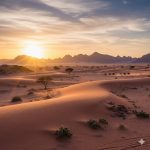
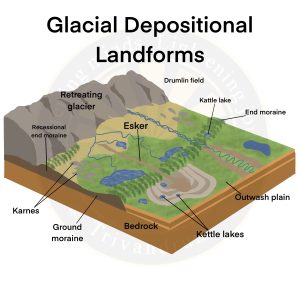
- When the glacier reaches its lowest point and melts, it leaves behind a stratified deposition material, consisting of rock debris, clay, sand, gravel etc.
- This layered surface is called till plain or an outwash plain and a downward extension of the deposited clay material is called valley train.
Esker
- Esker is a winding ridge of unassorted depositions of rock, gravel, clay etc. running along a glacier in a till plain.
- The eskers resemble the features of an embankment and are often used for making roads.
Kame
- Kame terraces are the broken ridges or unassorted depositions looking like hummocks in a till plain.
Drumlins
- Drumlins are oval-shaped hills, largely composed of glacial drift, formed beneath a glacier or ice sheet and aligned in the direction of ice flow.
- They are commonly referred to as a ‘basket of eggs’ topography.
Kettle Holes
- Kettle holes can be formed when the deposited material in a till plain gets depressed locally and forms a basin.
Moraines
- Moraines are made up of pieces of rock that are shattered by frost action, embedded in the glaciers & brought down the valley by them.
- Those that fall on the sides of the glacier form lateral moraines.
- When two glaciers converge, their inside lateral moraines unite to form a medial moraine.
- The rock fragments which are dragged along, beneath the frozen ice, are dropped when the glacier melts & spread across the floor of the valley as ground moraine.
- The glacier eventually melts on reaching the foot of the valley & the pile of transported materials left behind at the snout is terminal moraine or end moraine.
- The deposition of end moraines may be in several succeeding waves, as the ice may melt back by stages so that a series of recessional moraines are formed.