Definition
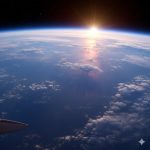
- The envelope of gases surrounding the earth is called the atmosphere.
- It forms a protective boundary between outer space and the biosphere and stops UV rays of the sun from reaching the earth.
- It acts as a greenhouse by allowing short-wave radiation (from Sun) and trapping long-wave terrestrial radiation (from Earth’s surface).
- The atmosphere takes care of extra-terrestrial objects like meteors that get burnt up while passing through the atmosphere due to friction.
Evolution of Atmosphere
- Primary Atmosphere
- Compose of helium and hydrogen
- The primary atmosphere was lost due to the escape of lighter gases like hydrogen and helium into space and the degassing of the Earth’s interior.
- Secondary Atmosphere
- It was primarily composed of nitrogen, carbon dioxide, and water vapor.
- Small amounts of other gases like ammonia and methane were also present.
- Oxygen was absent in the atmosphere during this stage.
- The secondary atmosphere was a result of volcanic activity, which released gases from the Earth’s interior into the atmosphere.
- Modern Atmosphere
- Oxygen began to accumulate in the atmosphere due to the emergence of photosynthetic organisms such as blue-green algae.
- The oxygen reacted with the methane and other gases in the atmosphere, forming carbon dioxide and water vapor.
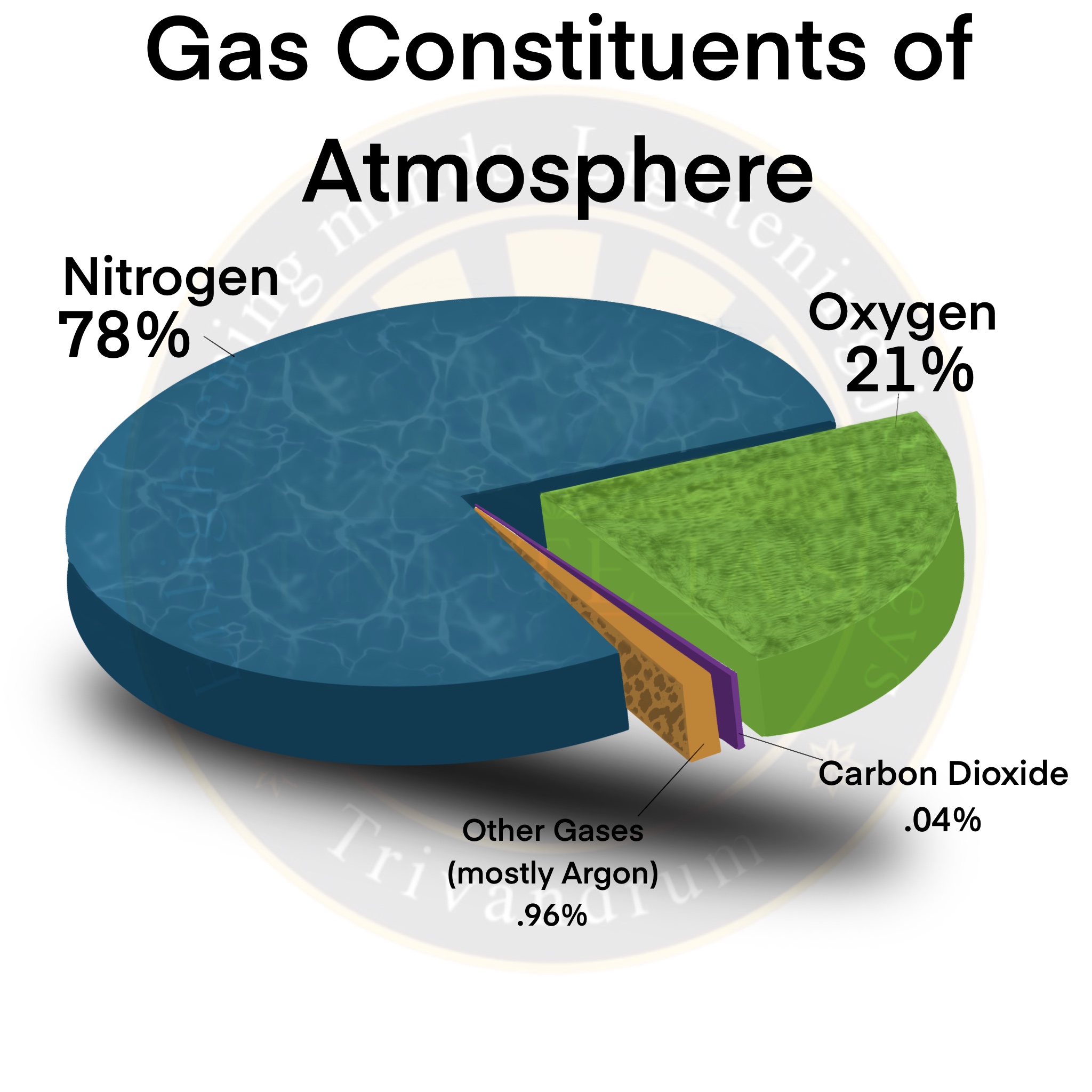
- The modern atmosphere is primarily composed of nitrogen (78%), oxygen (21%), and argon (0.93%).