

Why in the news?
- A recent study shows that cell arrangement in mangroves makes salt tolerant.
Mangroves
- What is it?: Mangroves are small trees and shrubs which grow along the coastlines and swamps.
- Facts to Know:
- India’s contribution is 45.8% total mangrove cover in South Asia.
- According to the India State of Forest Report, 2023, the mangrove cover in India is 4,991 sq km.
- West Bengal has the highest percentage of area under total Mangrove cover followed by Gujarat and Andaman Nicobar Islands.
- Significance of Mangroves:
- Storm and Wave Protection: Absorb wave and storm surge energy, reducing coastal damage from cyclones and tsunamis.
- Flood Mitigation: Their root systems stabilize soil and control water flow, reducing coastal erosion and flood risk.
- Carbon Sequestration: Mangroves store carbon, helping to mitigate climate change and lower the risk of climate-driven disasters.
- Support for Biodiversity and Livelihoods: Sustain marine biodiversity, supporting fisheries and livelihoods crucial for post-disaster recovery.
- Water Quality Improvement: Mangroves filter pollutants, ensuring cleaner water supplies, which aids disaster resilience.
- Ecosystem Services for Recovery: They help in ecosystem recovery after disasters by supporting wildlife and local fisheries.
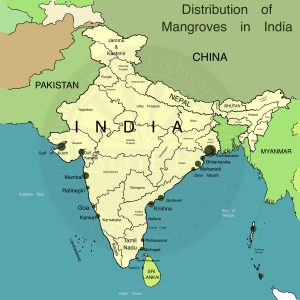
Source: The Hindu